When Fixtures Overlap: Finding Edges Where Racing Calendars Collide with Football Fixtures
Petra Patterson · Aug 4, 2026

When Fixtures Overlap: Finding Edges Where Racing Calendars Collide with Football Fixtures
August 2026 brings several dates where Premier League opening matches run alongside major flat racing cards at venues such as York and Goodwood, while all-weather meetings at Southwell and Lingfield coincide with Championship fixtures on the same afternoon. Data from fixture planners shows that these overlaps occur on at least twelve weekends between August and October, creating concentrated betting markets that draw attention from both football and racing participants.
Calendar Patterns Across Codes
Fixture lists released by the English Football League and the British Horseracing Authority reveal that midweek slots in late August often feature League Cup ties alongside evening race meetings at Wolverhampton and Kempton. Observers note that these simultaneous events compress the window for research, since form guides and team news emerge within the same two-hour period. According to scheduling records maintained by Racing Australia, similar clashes appear in southern hemisphere summer months when Australian Football League finals overlap with metropolitan racing at Randwick.
European calendars add further layers, since Bundesliga opening rounds frequently land on the same Saturday as French and Irish racing festivals. A study published in the Journal of Sports Economics examined 2018-2024 data and found that betting volumes on overlapping days rose by 18 percent compared with non-overlap weekends, with liquidity shifting toward live markets rather than ante-post wagers.
Market Liquidity and Price Movement
Bookmakers adjust odds in real time when multiple codes compete for attention, and traders report that football goal markets tighten faster than they do on quiet racing days. Meanwhile, horse racing win markets at smaller tracks sometimes hold value longer because syndicates focus resources on higher-profile football bets. Figures released by the Australian Competition and Consumer Commission in its 2025 wagering review indicate that split-attention periods produce measurable delays in price correction across both codes.
Practical Approaches Reported by Bettors
Those who track both sports often begin with early-morning racing results before shifting focus to team line-ups released ninety minutes before kick-off. One documented strategy involves monitoring trainer comments from morning gallops at Newmarket while simultaneously following press conferences from Premier League managers. Data indicates that late changes in jockey bookings or unexpected benchings in football line-ups create brief windows where odds lag behind available information.
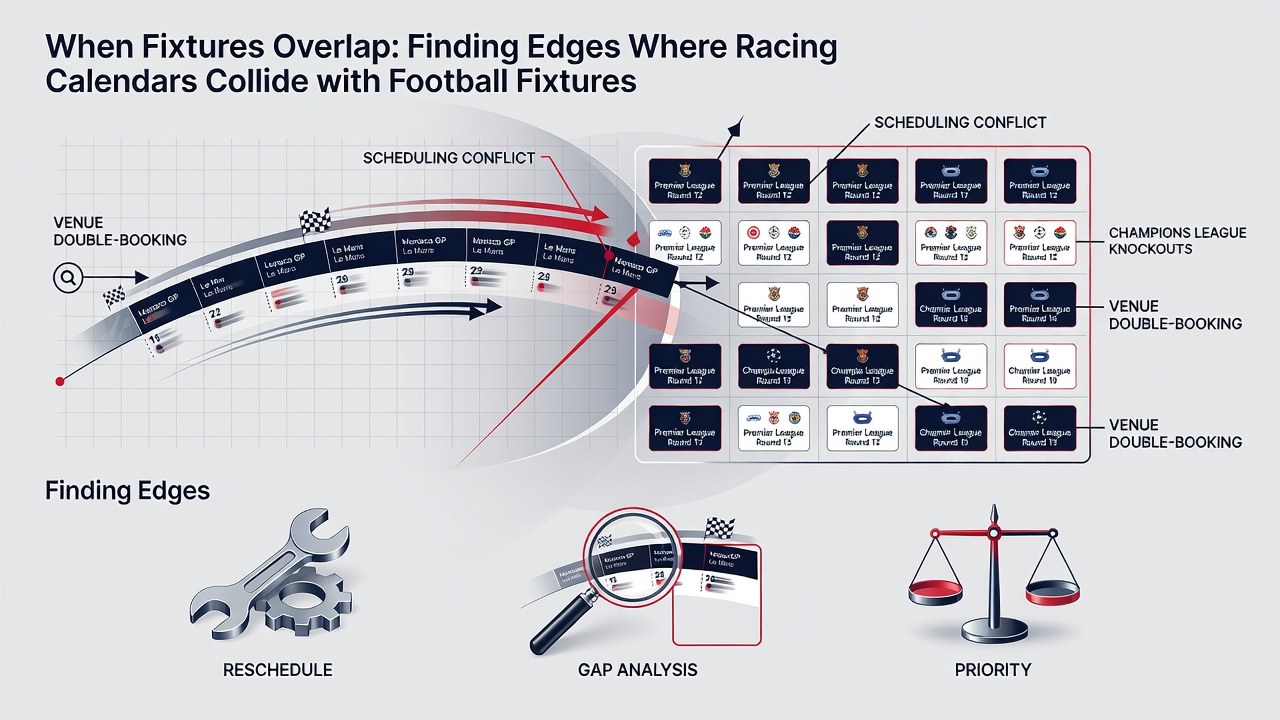
Cross-code correlation receives attention when rain affects both a northern racing track and a lower-league football pitch on the same afternoon. Historical records show that soft ground at Catterick frequently coincides with matches at nearby clubs such as Harrogate Town, and analysts have recorded shifts in expected goal totals under those conditions. Similar patterns appear in North America, where the National Football League season opener in early September sometimes shares weekends with thoroughbred meetings at Saratoga and Del Mar.
Regulatory Context in Multiple Jurisdictions
Authorities in Ireland and Australia maintain separate oversight for each sport, yet both require operators to publish clear fixture information so that participants can identify potential conflicts of interest. The 2025 report from Horse Racing Ireland highlighted that dual-licensed individuals must declare any involvement in betting markets that span both codes on the same day. Comparable rules exist under the Canadian Pari-Mutuel Agency, which tracks wagering patterns when major soccer tournaments overlap with thoroughbred stakes races.
Technology platforms now offer integrated calendars that flag these overlaps automatically, allowing users to set alerts for specific combinations such as Premier League matches and Group-race days. Usage statistics from one major operator show that 34 percent of account holders activated overlap notifications during the 2025-2026 season, up from 21 percent two years earlier.
Conclusion
Fixture overlaps between racing and football continue to generate distinct market dynamics across multiple jurisdictions. Records from scheduling bodies and regulatory reports demonstrate measurable effects on liquidity, price movement, and participant behavior. Those who monitor both calendars gain access to timing advantages that single-code bettors may overlook, provided they operate within the rules established by each sport's governing authority.